Gene Expression
Explore VBRC scientific insights, biological concepts, research topics, mechanisms, and connected perspectives across modern life sciences.
From Gene Expression to Modern Biotechnology
Gene expression is the process through which information stored in DNA becomes functional RNA and, in many cases, protein. Understanding this process provides a foundation for modern molecular biology, genomics, biotechnology, and biomedical research.
A genome contains an enormous amount of biological information, but DNA sequence alone does not tell us which genes are active, when they are active, or how strongly they are expressed. Gene expression provides the dynamic layer between genetic information and cellular function. Modern biotechnology has progressively transformed the way researchers observe this layer: from measuring individual transcripts to profiling thousands of genes simultaneously and interpreting their behavior computationally.
What is gene expression?
Gene expression describes the set of molecular processes through which information encoded in a gene is used to produce a functional biological output. For protein-coding genes, this generally begins when DNA is transcribed into RNA. Messenger RNA can then serve as a template for protein synthesis through translation. This simplified DNA-to-RNA-to-protein framework is central to molecular biology, although real gene regulation involves many additional layers, including RNA processing, degradation, localization, translation, and protein turnover.
Importantly, genes are not simply switched on or off. Their activity can vary according to cell type, developmental stage, environmental conditions, signaling pathways, and disease state. Two cells can therefore contain essentially the same genome while displaying very different biological properties because different groups of genes are expressed at different levels.
This dynamic nature of gene expression explains why measuring genetic information alone is insufficient for understanding many biological processes. Researchers need to determine which genes are active, how their activity changes, and how these changes relate to cellular behavior.
The genome provides biological instructions, while gene expression helps determine how those instructions are interpreted in a specific cellular context.
How cells control the first step
Transcription is the first major step in the expression of genetic information. RNA polymerase reads a DNA template and synthesizes an RNA molecule. In eukaryotic cells, the resulting transcript can undergo processing events such as capping, splicing, and polyadenylation before mature messenger RNA reaches the cytoplasm.
Regulation can occur at multiple stages. Transcription factors can influence whether a gene is transcribed, chromatin structure can affect accessibility of regulatory regions, and RNA-processing mechanisms can determine which transcript forms are produced. Consequently, measuring RNA abundance gives researchers a window into cellular regulation, but it must always be interpreted within the biological context in which the RNA was produced.
The relationship between transcription and translation is also more complex than a simple linear pathway. RNA molecules can be stored, degraded, transported, modified, or regulated before they are used for protein production. These additional layers are essential for understanding why RNA abundance and protein abundance do not always change in parallel.

How scientists measure biological activity
Once researchers ask which genes are active, the next challenge is measurement. Traditional approaches such as reverse transcription quantitative PCR can quantify selected RNA molecules with high sensitivity. Researchers may also use microarrays to measure many predefined transcripts simultaneously, while RNA sequencing provides a broader approach in which RNA-derived molecules are sequenced and computationally quantified.
The appropriate method depends on the scientific question. If the researcher already knows the genes of interest, a targeted method can be efficient and precise. If the objective is to discover unexpected transcripts, alternative isoforms, or global changes in gene expression, sequencing-based approaches provide a much wider view.
| Approach | Typical strength | Main limitation |
|---|---|---|
| RT-qPCR | Sensitive measurement of selected transcripts | Usually targeted to a limited number of genes |
| Microarray | Parallel measurement of many predefined transcripts | Depends on probe design and known targets |
| RNA-seq | Broad transcriptome profiling and discovery | Requires sequencing and computational analysis |
| Single-cell RNA-seq | Measures gene expression at cellular resolution | More complex experimental and computational workflows |
How modern sequencing turns RNA into data
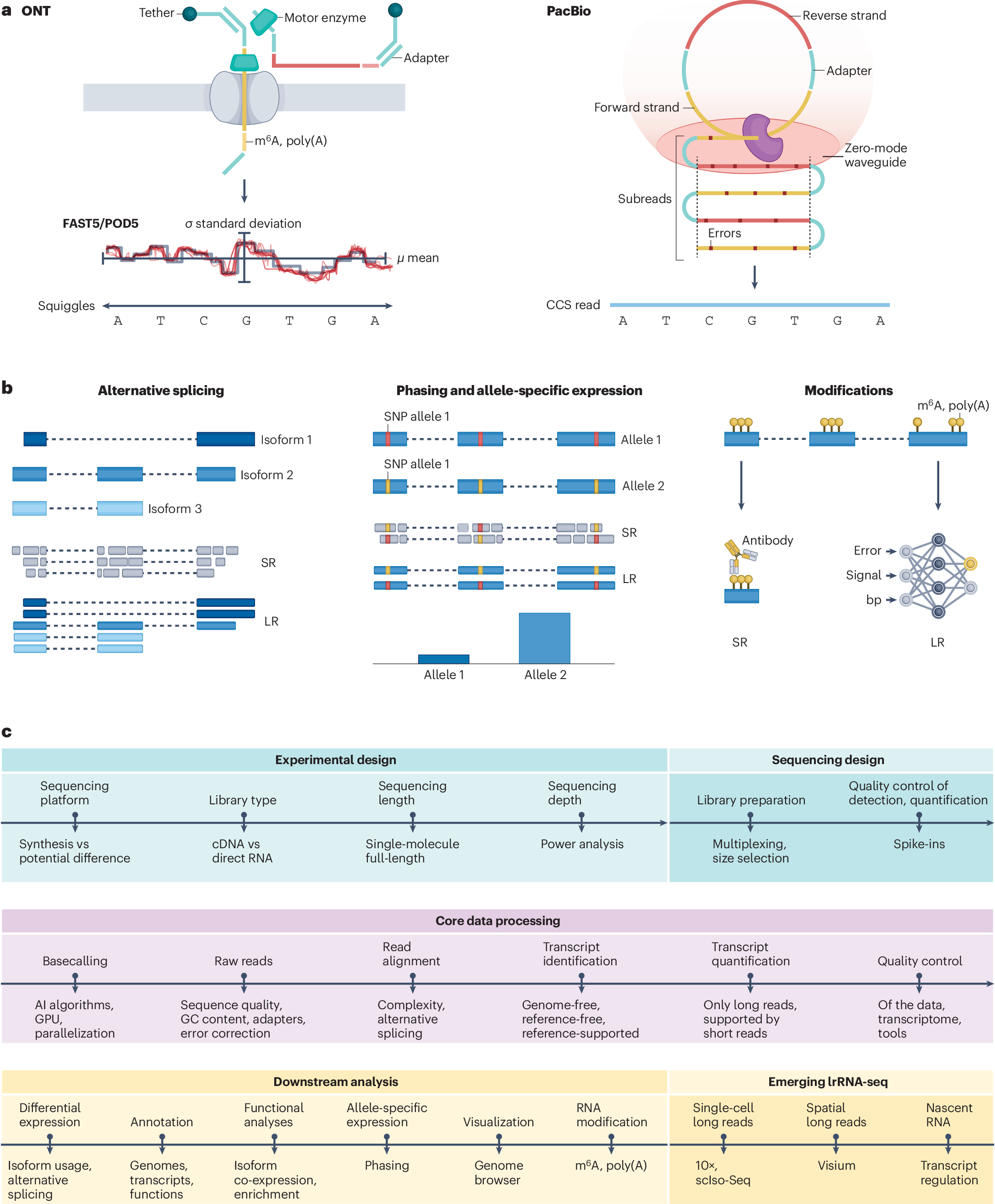
RNA sequencing changed gene-expression research by allowing investigators to examine transcriptomes at large scale. In a conventional RNA-seq experiment, RNA is extracted from biological samples and converted into a sequencing-compatible library. The resulting molecules are sequenced, producing millions of short or long sequence reads that must subsequently be processed computationally.
The power of RNA-seq comes from its ability to capture much more than the expression level of a single gene. Depending on the experimental design and sequencing technology, researchers can investigate differential expression, alternative splicing, transcript structures, novel isoforms, fusion transcripts, non-coding RNAs, and other aspects of RNA biology.
Long-read sequencing has further expanded this landscape by helping researchers resolve full-length transcripts and complex isoforms that can be difficult to reconstruct from short sequencing reads. This illustrates an important principle in modern biotechnology: technological improvements do not simply produce more data; they change which biological questions can be answered.
Turning sequencing reads into an expression profile
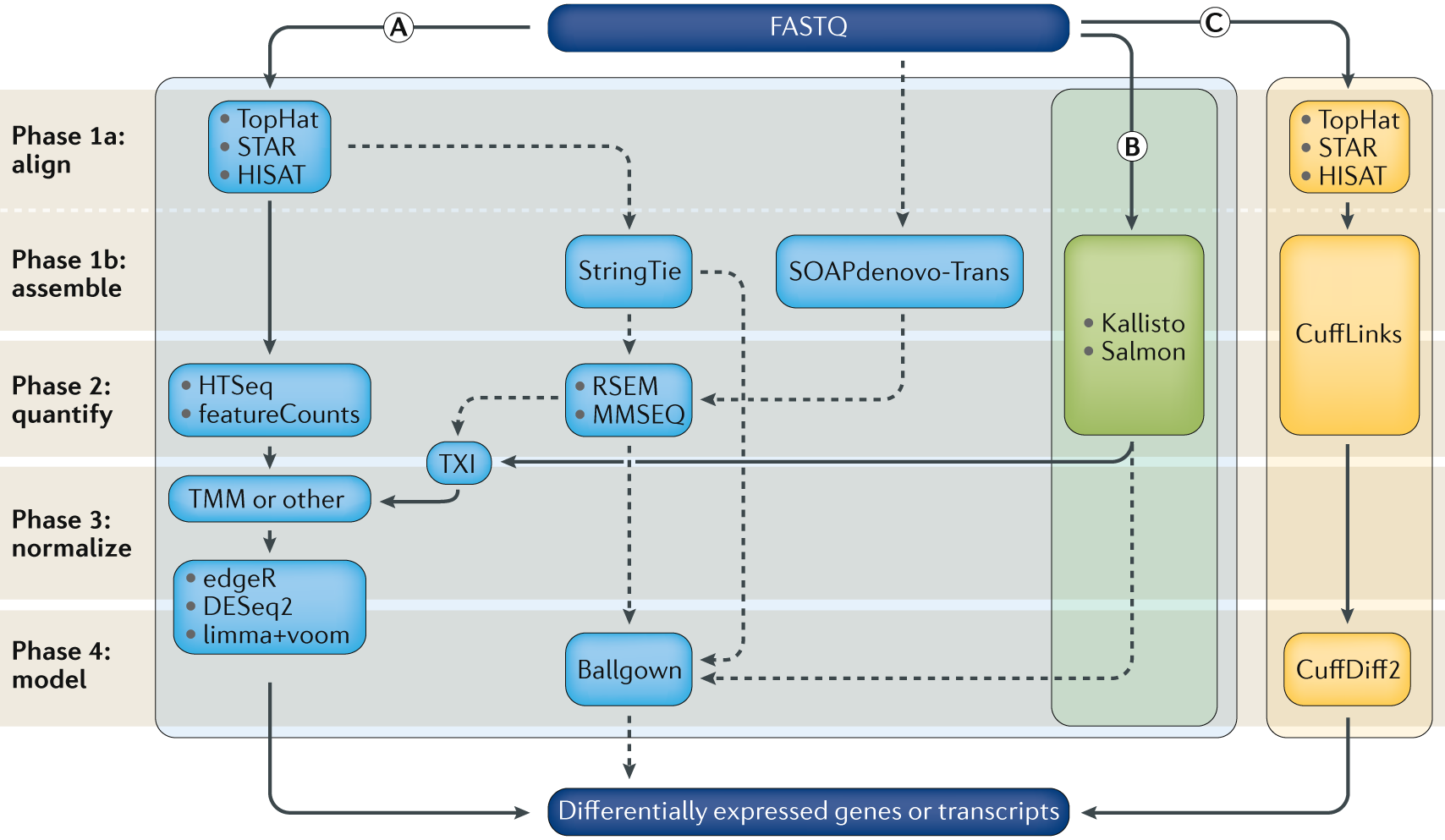
Sequencing produces molecular measurements, not biological conclusions. The first analytical challenge is therefore to transform raw sequencing reads into a representation of the transcriptome. Researchers typically begin with quality assessment, followed by preprocessing steps such as adapter removal and quality filtering. Depending on the experimental design, reads may then be aligned to a reference genome or transcriptome, or processed using approaches that do not require a complete reference.
The resulting information can be summarized as expression values representing the abundance of transcripts in each biological sample. Normalization is important because sequencing depth and technical composition can differ between samples. Without appropriate normalization, apparent differences could reflect technical variation rather than biology.
This stage is where molecular biology and computational biology become tightly connected. The biological question determines the experimental design, while the experimental design determines which analytical conclusions are justified.
From expression profiles to biological interpretation
Once expression values have been generated, researchers can compare biological conditions. A common objective is differential expression: identifying genes whose expression differs systematically between groups such as treated and untreated cells, healthy and diseased tissue, or different developmental states.
Statistical analysis is essential because biological measurements contain both meaningful variation and noise. Researchers must distinguish reproducible differences from fluctuations caused by sampling, technical variation, or insufficient replication. Experimental design, biological replicates, appropriate statistical models, and correction for multiple testing therefore play central roles in reliable transcriptomic analysis.
Importantly, identifying a differentially expressed gene does not automatically establish its biological function. Researchers often move from individual genes toward pathways, functional categories, regulatory networks, and other higher-level representations that help explain how multiple molecular changes may contribute to a phenotype.
Why average measurements are sometimes not enough
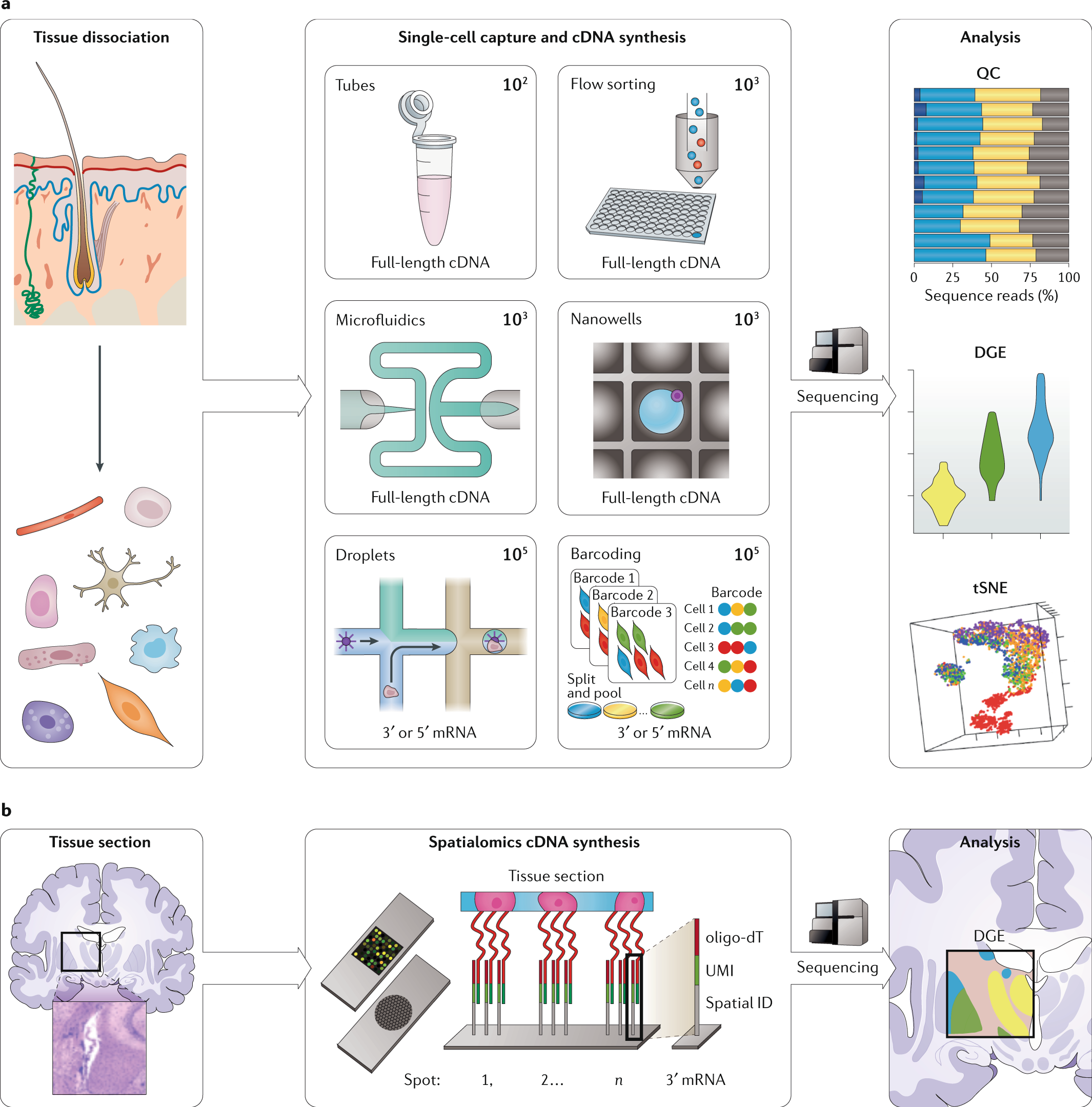
A conventional RNA-seq experiment often produces an average expression profile across many cells. This is extremely useful, but it can hide differences between individual cell populations. A tissue may contain several cell types, each contributing a different molecular program to the overall signal.
Single-cell RNA sequencing addresses this limitation by measuring transcriptomes at the level of individual cells or cellular partitions. Researchers can identify distinct populations, investigate cellular states, reconstruct developmental trajectories, and examine how cells respond differently to their environment.
Spatial transcriptomics adds another layer by preserving information about where molecular signals occur within tissue. Together, these technologies move gene-expression research from a general question such as “which genes change?” toward more specific questions such as “which cells change, where do they change, and how does their local environment influence that change?”
Interpretation requires biological context
The central challenge of transcriptomics is not simply generating expression measurements but understanding what those measurements mean biologically. A gene can increase in expression because it is directly activated by a regulatory mechanism, because the proportion of a particular cell type has changed, or because the biological system is responding indirectly to another signal.
Researchers therefore combine transcriptomic information with other types of evidence. Genomic variation, protein measurements, epigenetic information, microscopy, functional assays, and physiological observations can all contribute to a more complete interpretation.
This integrated approach is especially important in biotechnology. A transcriptomic result can identify a promising candidate, but functional validation is usually required before a biological mechanism or engineering strategy can be considered established. The transition from correlation to mechanism is one of the central challenges of modern biological research.
How gene-expression knowledge becomes useful
Gene-expression analysis has become an important component of biotechnology because it allows researchers to observe how cells respond to genetic modifications, environmental conditions, therapeutic compounds, or engineered pathways. In industrial biotechnology, transcriptomic measurements can help characterize production strains and identify biological bottlenecks. In biomedical research, they can reveal disease-associated molecular programs or suggest candidate biomarkers.
Synthetic biology provides another important example. Engineers can modify promoters, regulatory sequences, RNA elements, or other components of a genetic system and then measure how those changes influence expression. Instead of designing biological systems entirely by intuition, researchers can use measurement and computational analysis as part of an iterative design-build-test- learn cycle.
RNA-based technologies also demonstrate the broader potential of controlling gene expression. Researchers can engineer RNA molecules or regulatory mechanisms to influence transcription, RNA stability, translation, and other cellular processes. In this way, understanding natural gene regulation becomes a foundation for designing new biological functions.

From biological information to biological understanding
Gene expression provides a useful example of how modern biology connects fundamental concepts with increasingly sophisticated technologies. The starting point is simple: cells use genetic information to produce functional molecules. The scientific challenge is to understand when, where, why, and to what extent that information is used.
Measurement technologies allow researchers to observe RNA at increasing scale and resolution. Sequencing transforms molecular material into digital information. Computational methods transform that information into expression profiles, statistical comparisons, pathways, and biological hypotheses. Experimental validation then tests whether those hypotheses correspond to real biological mechanisms.
The progression from DNA to RNA, from RNA to data, and from data to biological interpretation illustrates a central principle of contemporary biotechnology: biological knowledge becomes more powerful when different layers of information are connected.
From a gene to a biological system
Gene expression is more than the production of RNA or protein. It is one of the mechanisms through which a genome interacts with cellular context, environmental signals, and biological state.
Modern biotechnology increasingly depends on our ability to connect these layers — genetic information, molecular activity, cellular context, computational data, and biological function.
That connection is what turns a sequence into information, information into knowledge, and knowledge into a foundation for scientific discovery and biotechnology.
Scientific Sources
Stark R, Grzelak M, Hadfield J. RNA sequencing: the teenage years. Nature Reviews Genetics.
Monzó C, Liu T, Conesa A. Transcriptomics in the era of long-read sequencing. Nature Reviews Genetics.
Vogel C, McManus MT. Next-generation analysis of gene expression regulation. Peer-reviewed review article available through PMC.
The centrality of RNA for engineering gene expression. Peer-reviewed article available through PMC.